
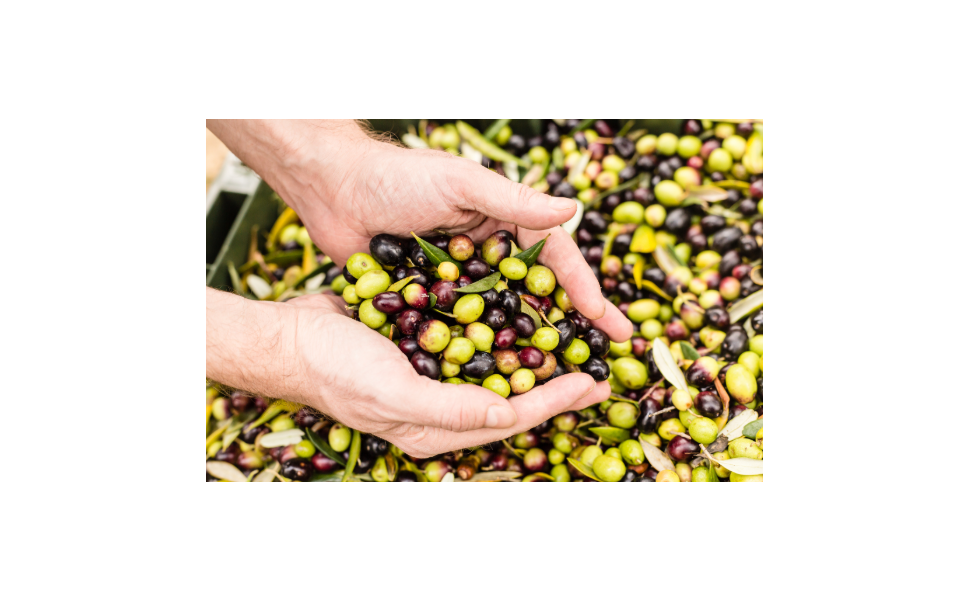
Manufacture of olive oil: The complete guide of the steps to understand its superior quality
The manufacture of olive oil is not a simple mechanical process; It's a specific art, a trituration meticulous, which directly determines its final quality, its aroma and its precious benefits for health. If you wonder how to get this prestigious name ofextra virgin olive oil, know that everything is played in the perfect mastery of the different stages of production, from the tree to the bottle.
In summary, a good olive oil relys on a fragile balance between a controlled harvest, rapid trituration and a purely mechanical extraction process. In this complete guide, you will discover every key step in the manufacture of oil and understand why they are essential to preserve the precious polyphenols and the lowest possible acidity.
1. The harvest of olives: a determining step
Everything starts with the harvest, usually made between October and January. This is one of the pillars of the quality, because it determines the final aromatic profile.
The precise moment of harvest strongly influences the taste of oil:
-
Young olives (beginning of the season) give an oil more intense, ardent, with green fruity and richer in polyphenols, These natural antioxidants.
-
Mature olives (End of season) produce a softer oil, mature fruity, more yellow and less bitter.
The harvest can be done by hand, using combs or mechanical tools, but it must be carried out with extreme care not to hurt the fruits. Damaged or fermented olives oxidize rapidly, increasing the acidity of the oil and degrading its quality (Potential potentially virgin extra to virgin).
2. Crushing or trituration: transform the olive into paste
It's the heart of the process at oil mill. To ensure freshness, olives must be tried a few hours after harvest (maximum 24h). This stage of trituration first, consists of stripping and washing the olives. Then they are crushed - traditionally with stone grinding wheels, or more often today with metal mills - to obtain a homogeneous pulp composed of pulp, water and oil. This know-how, inherited from the Carthaginians and Romans, is at the heart of the identity of thetunisian olive oil of quality.
To understand how this millennium know-how influences the world reputation of the Tunisian elixir, discover
3. Mixing: the art of liberating the oil
It's a crucial step of the manufacturing. After grinding, the dough is slowly kneaded in steel bins. This stage of mixing allows micro oil droplets to come together and separate from other solid elements (cumbber) and liquids (margines).
Here, the decisive factor is the temperature : to get the name cooling (A key legal criterion for extra virgin olive oil), the temperature should never exceed 27 ° C. Beyond that, the oil becomes more fluid and extraction is easier, but you lose a large part of the volatile aromas and precious natural antioxidants.
4. Extraction: Separate pure oil
The centrifugal decanter take over the mixer. Thanks to purely mechanical methods and without any chemical substance, the pure oil is separated from the vegetable water and the remaining solids. It is this mechanical method that guarantees the purity and the quality product.
Once extracted, the oil is stored in inert stainless steel tanks, sheltered from light and air.
5. Storage and bottling: preserve excellence
Once extracted, the oil is stored in inert tanks, sheltered from light and air. This stage of storage allows stabilizing the oil and decant the last solid residues, preserving all its properties before consumption.
Finally, the oil is filtered and bottled. The choice of the container is important: a dark glass bottle protects the oil from the light and ensure better preservation.
Did you know ?
A transparent radius bottle loses up 30% from its polyphenols in just 3 months !
Why manufacturing influences superior quality
Each stage of the process has a direct impact on:
-
Taste and freshness.
-
Free acidity.
-
The content of polyphenols and in antioxidants.
Conclusion
The manufacture of olive oil is a balance between technique and know-how. Understand these steps makes it possible to choose their oil and appreciate its quality.
-> To complete your reading, discover also our guide on how to keep the olive oil to preserve all its properties.





 EN
EN
 FR
FR
 Arabe
Arabe
Leave a Reply Cancel Reply